
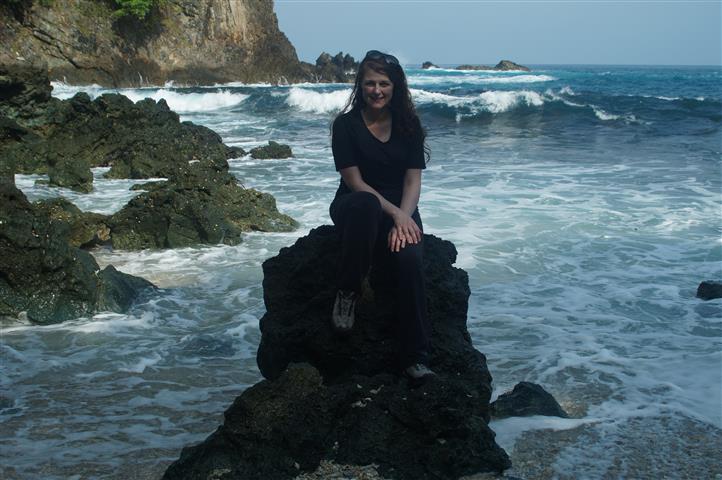
Ujung Kulon National Park was the kind of place that changes the definition of luxury. Three days on Peucang Island, at the western tip of Java, with almost no connection to the outside world, cold running water and electricity only after dark – and I would not have exchanged it for a beach club, a rooftop bar or reliable Wi-Fi.
The crossing had been impossible for several days because of rough seas. When we finally reached Peucang Island, we were the first – and, at first, the only – guests. There were four bungalows, two dining rooms with a kitchen and a jetty. That was all. The rhythm of the day came from the light, the weather and whatever moved through the clearing outside our hut.
Peucang Island: the luxury of less
At first, the lack of connection was noticeable. Then it became the point. There was no reason to check anything, no schedule to optimise and nowhere more urgent to be. For three days, life became wonderfully small: snorkelling over coral reefs, walking through rainforest, sitting on white sand and making sure a very determined gibbon did not steal my sunscreen.
That last part was not theoretical. A small gibbon had learnt that plastic bags often meant food. He took my zip-lock bag, opened it on the veranda and bit into an expensive tube of sun cream. It clearly was not what he had hoped for. The tube landed in a corner; the gibbon stayed on the railing and judged us from a safe distance.
Wildlife in Ujung Kulon National Park is not decoration
By evening, wild boar came into the clearing near the bungalows. Gibbons moved through the trees. In the rainforest, sunlight caught in enormous spider webs; peacocks walked past; I saw my first real monitor lizard and briefly felt as if I had wandered into Jurassic Park.
Ujung Kulon is not a wildlife theme park. It is a protected ecosystem that includes Peucang Island, Panaitan Island and the Ujung Kulon peninsula, and it is home to the critically endangered Javan rhinoceros. Seeing a rhino is not a visitor promise, nor should it be. The experience is about being a guest in a place where the animals are not there for us.
What three unplanned days taught me
I have always liked a trip that combines city, sea and nature. But Ujung Kulon reminded me that nature does not need constant improvement. I did not need a packed itinerary. Snorkelling brought blue sea stars and schools of colourful fish; a walk brought a new texture, a bird or a view of Panaitan Island in the distance. Even doing almost nothing felt like enough.
I remember burying my toes in warm white sand and feeling a little like Robinson Crusoe. The only task was protecting my sun cream from the gibbon. It made me realise, again, how little I actually need to feel completely content – and how good it is to leave space for that realisation while travelling.
Can you still travel to Peucang Island?
Yes, it is still possible to visit Peucang Island and Ujung Kulon National Park. Guided trips continue to include boat transfers, simple accommodation, rainforest walks and snorkelling, although the practical arrangements may be different from those I experienced.
Visitors currently need an entrance permit and must be accompanied by national park staff, a licensed guide or an authorised nature-tour operator. Before planning a trip, check the current Ujung Kulon visitor rules published by Indonesia’s Ministry of Tourism. Boat crossings remain dependent on sea and weather conditions.
I have not returned recently enough to recommend a particular lodge or tour operator. What I can say is that this remains a remote journey rather than an effortless island escape. Limited facilities, long transfers and a degree of uncertainty are still part of the experience.
It is also an example of what I now call flashpacking at 50+: keeping the curiosity and independence of backpacking without treating discomfort as proof of adventure.
Was Ujung Kulon worth the effort?
Absolutely. But not because it was comfortable.
I would not pretend that cold water, uncertain crossings and simple accommodation are secretly glamorous. They are not. Nor do I believe that discomfort makes a journey more authentic. I am perfectly happy to choose a proper bed, a good restaurant and the occasional first-class train.
But some places ask for more effort because remoteness is part of what has protected them.
Ujung Kulon gave me something no polished resort could have offered: the feeling of briefly stepping outside my usual life and comfort zone and discovering how little I needed to be completely happy.
Warm water would have been lovely. Electricity all day would have been convenient. A gibbon-free place to store my sunscreen would certainly have helped.
But I remember the silence, the rainforest and the white beach far more clearly than any inconvenience.
Some journeys are worth taking because everything works beautifully. Others stay with you because, for a few days, almost nothing works as usual.
Ujung Kulon National Park was one of those.

