
Marrakech may be the obvious choice. Tunis is the more interesting one.
Before my first visit, I associated Tunisia mainly with beach resorts, ancient ruins and desert landscapes. I was not expecting an elegant Mediterranean capital with independent fashion labels, concept stores, rooftop terraces and its own Fashion Week. Tunis changed the picture in my head completely.
This is not a comprehensive guide to everything you can see and do in the city. It is my personal guide to the places and experiences that made Tunis worth the trip for me: fashion with a sense of humour, traditional craftsmanship, lunch surrounded by beautiful things and an afternoon in blue-and-white Sidi Bou Said.
Start in the Medina of Tunis
The contrast between the European-looking new town and the narrow lanes of the Medina is part of the city’s appeal. In the souks around the Zitouna Mosque, different streets traditionally specialise in perfume, leather, fabrics or shoes. I found the atmosphere much more relaxed than I had expected. The shopkeepers I met were friendly rather than pushy, which made browsing genuinely enjoyable.
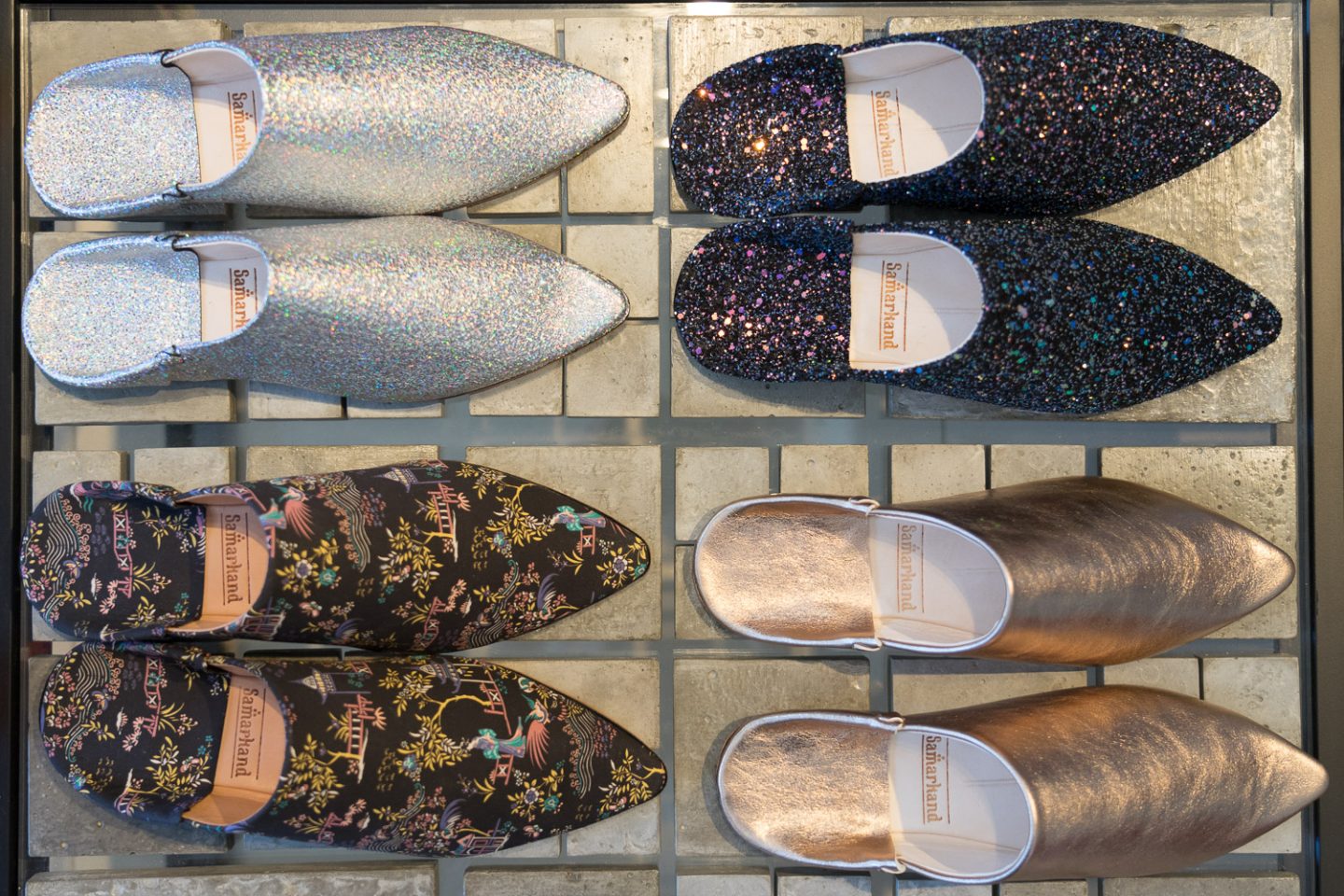
I came home with a pair of babouches and a soft, cream-coloured chechia: the traditional Tunisian felt hat that local designers and younger Tunisians had begun wearing with jeans, leather jackets and contemporary clothes.
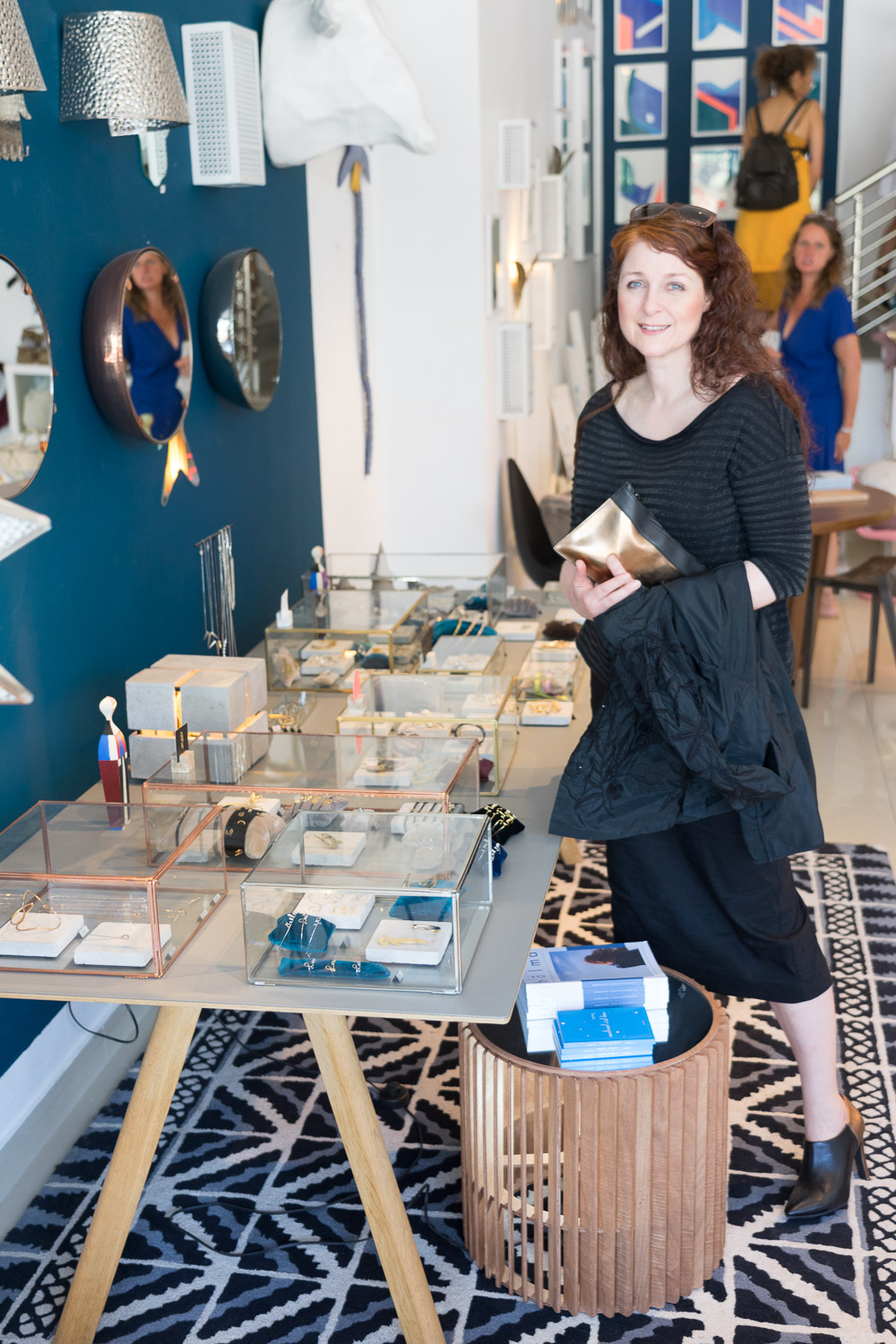
I discovered Supersouk on my first visit to Tunis, when it was still based in La Soukra. The concept store brought together contemporary Tunisian fashion, design and craftsmanship in a way I had not seen before. It has since moved to La Marsa and remains an excellent address for discovering independent Tunisian labels.
It was at Supersouk that I found my Samarkand babouches, created by Tunisian designer Thouraya Ouahada. Made from carefully chosen fabrics and finished by hand, they were one of those rare travel purchases that moved effortlessly into my everyday wardrobe. I have not been able to confirm whether Samarkand is currently producing regular collections, which makes my pair feel even more special.
For lunch, I loved Fondouk El Attarine. Set around a beautiful courtyard in the perfume souk, it combines Tunisian and Mediterranean food with small shops on two levels. Concentrating on lunch is difficult when lovely objects are waiting on every side. A shopping circuit before the meal, after it and possibly between courses feels entirely reasonable.
Discover contemporary Tunisian fashion
Tunisian fashion became the real surprise of my trip. At Tunis Fashion Week, I saw a creative scene that combined local traditions with a much more international, contemporary outlook. The event still takes place in the capital; dates and venues are published on the official Tunis Fashion Week website.
One of my favourite discoveries was LYOUM. The label replaces glitter and predictable oriental motifs with good cotton, clean shapes and witty references to Tunisian life. A black shirt declaring that “Cobain loved falafel” captured its attitude perfectly: Mediterranean, playful and proudly local.
For something quieter and more architectural, look at ANISSA AIDA. Designer Anissa Meddeb combines Tunisian craftsmanship with Japanese influences, sculptural silhouettes and shades of Mediterranean blue and white. Her pieces are minimal without being ordinary – exactly the kind of fashion worth discovering while travelling. The label currently receives visitors by appointment in Mutuelleville.
Follow Azzedine Alaïa to Sidi Bou Said
Sidi Bou Said was one of my highlights. Its white walls, blue doors and extraordinary Mediterranean light make walking slowly feel like a perfectly adequate plan for the day. It is also closely connected to Azzedine Alaïa, who studied at the École des Beaux-Arts in Tunis before leaving for Paris.
In 1986, Alaïa bought a property at the top of the hill in Sidi Bou Said. His close friend, the Tunisian painter Jalel Ben Abdallah, designed a house for him that respected the village’s Arab-Andalusian architecture: white walls, blue shutters, mashrabiya windows, wrought-iron balconies and a small dome above the roof. Alaïa visited only rarely and never found the time to furnish it. After his death in 2017, his foundation named the house Dar Alaïa.
I was fortunate enough to enter Dar Alaïa during my visit to Tunis. The almost empty rooms did not contain a conventional display of dresses. Instead, photographs and video installations documented Alaïa’s life, his work and the major exhibitions devoted to him around the world. That sense of space and stillness, surrounded by the Mediterranean light that influenced parts of his work, created a connection to the designer that a traditional fashion exhibition could not have offered.
Dar Alaïa is part of the Fondation Azzedine Alaïa, but it does not currently publish regular opening hours or public ticket information for the house in Sidi Bou Said. It should therefore not be treated as a museum that visitors can simply turn up to see. Its history nevertheless makes Alaïa’s relationship with Sidi Bou Said an essential part of the city’s fashion story.
I stopped for lunch at La Villa Bleue, a small five-star hotel in a wonderfully winding building above the sea. The starters were excellent, the grilled octopus even better, and a glass of Tunisian rosé called Pétale de Rose completed the scene. It was one of those lunches that made time feel wonderfully irrelevant.
Where I would stay
If the budget allows, my choice would still be the Four Seasons Hotel Tunis in Gammarth. I remember elegant interiors, a beautiful spa, sea views and a terrace made for a drink at the end of the day. It offers calm Mediterranean luxury, although its coastal location means travelling into central Tunis and the Medina.
Tunis is not a polished fashion capital trying to compete with Paris or Milan. That is precisely why I found it so appealing. Its style comes from the meeting of old crafts and new ideas, North Africa and the Mediterranean, tradition and a generation determined to interpret it differently.
Go before everyone else decides that Tunis is the new Marrakech.
I visited Tunis with the support of Discover Tunisia. As always, the experiences and opinions are entirely my own. Please check current opening hours and appointments directly before travelling.
Tunis revealed a fashion culture I had not expected. For another designer-led journey, visit Armani/Silos in Milan – and discover why this fashion museum is worth your time.

